10 Things to Say to Staring Strangers - Instead of "Mind Your Business"
Parenting, Autism Support
Navigating an autism meltdown in public is one of the most intense experiences a parent can go through. Their child is suffering, and it's hard to know how to help them. You feel alone as a parent, and afterwards, you're completely drained.
But on top of that? Strangers staring at you, sometimes even making snide comments about discipline or "controlling your child", brings up emotions from shame and embarrassment to grief and anger. What's more, it's difficult to know what to say to a complete stranger while navigating one of the most intense aspects of autism parenting.
When my son was still having meltdowns, my inner voice wanted to scream expletives when onlookers were staring or commenting, but I realized that having a few ready-to-use meltdown scripts is helpful for protecting your child, setting boundaries, and hopefully lessening your mental load.
Why Having Scripts Ready Matters
When your child is having an autism meltdown in public, your brain is busy triaging: keeping them safe, staying calm, and trying to get through the moment. Coming up with an articulate explanation for strangers is just not going to happen.
That is where simple public meltdown scripts come in. They are short phrases you can keep in your back pocket so there's less pressure to come up with an explanation when you're cognitive load is on overdrive and your adrenaline has you jumping out of your skin.
10 Things to Say Instead of “Mind Your Business”
“My child is autistic and overwhelmed right now. We’re okay, thank you.”
This brief explanation acknowledges the situation and gently closes the door to further questions, while reminding you that you are handling it.“He’s having an autism meltdown, not a tantrum. We just need a little space.”
This phrase offers education without a lecture and clearly asks for what you need: space, not judgment.“Loud noises and crowds are really hard for her. We’re working through it.”
When an autism meltdown in public is triggered by sensory overload, this script highlights the cause and reassures others that you have a plan.“We’re focusing on keeping him calm and safe. Thanks for giving us a moment.”
This one shifts the attention back to your child’s safety and politely signals that staring is not helpful, but stepping back is.“This is part of her disability. Your patience is appreciated.”
A short, respectful reminder that what they are seeing is connected to a disability, not “bad behavior.”“He’s doing the best he can right now, and so am I.”
This script is as much for you as it is for them. It invites compassion and quietly pushes back against judgmental looks.“We’re practicing being in public places. Sometimes it looks like this.”
Many families work hard to help their child tolerate new environments. This line normalizes the process and frames the meltdown as practice, not failure.“If you could give us a bit more room, that would really help.”
A practical, direct request that turns a stare into something useful: making space so you can support your child more easily.“We’re okay, but it might look intense. Thank you for understanding.”
Sometimes people stare because they are worried. This reassures them while setting a gentle boundary around your family’s privacy.“This is an autism meltdown. The kindest thing you can do is carry on.”
This is a clear, kind way to say, “Please do not watch,” without using harsh words. It also offers a tiny piece of education about what helps.
Making These Scripts Your Own
Public meltdown scripts work best when they sound like you. These scripts are just a foundation. As an autism parent, it's crucial that you are empowered to make decisions, speak, and simply be in the world that is authentic and aligned for you and your family (except maybe leave out the frustration-laden expletives... I'm saying that for a friend).
That said, feel free tweak any of these scripts to your liking, or shorten them to a single sentence you can remember easily. You might even keep a favorite line in your phone’s notes app or practice saying it out loud so it feels more natural in the moment.
💡 Gentle Reminder: You do not owe strangers a full explanation. A short, calm sentence is more than enough.
You Deserve Support, Too
Handling an autism meltdown in public can leave you drained, even if you handled it beautifully. Afterward, give yourself a moment to breathe, drink some water, or text a supportive friend. You are not alone in this experience, and needing a few prepared phrases does not make you weak; it means you've prepared for the hard moment instead of sticking your head in the sand. Your child is lucky to have someone who keeps showing up, meltdown and all.
Want More Support for the Before, During, and After of Autism Meltdowns?
These scripts can help you protect your child and your own mental load in public moments.
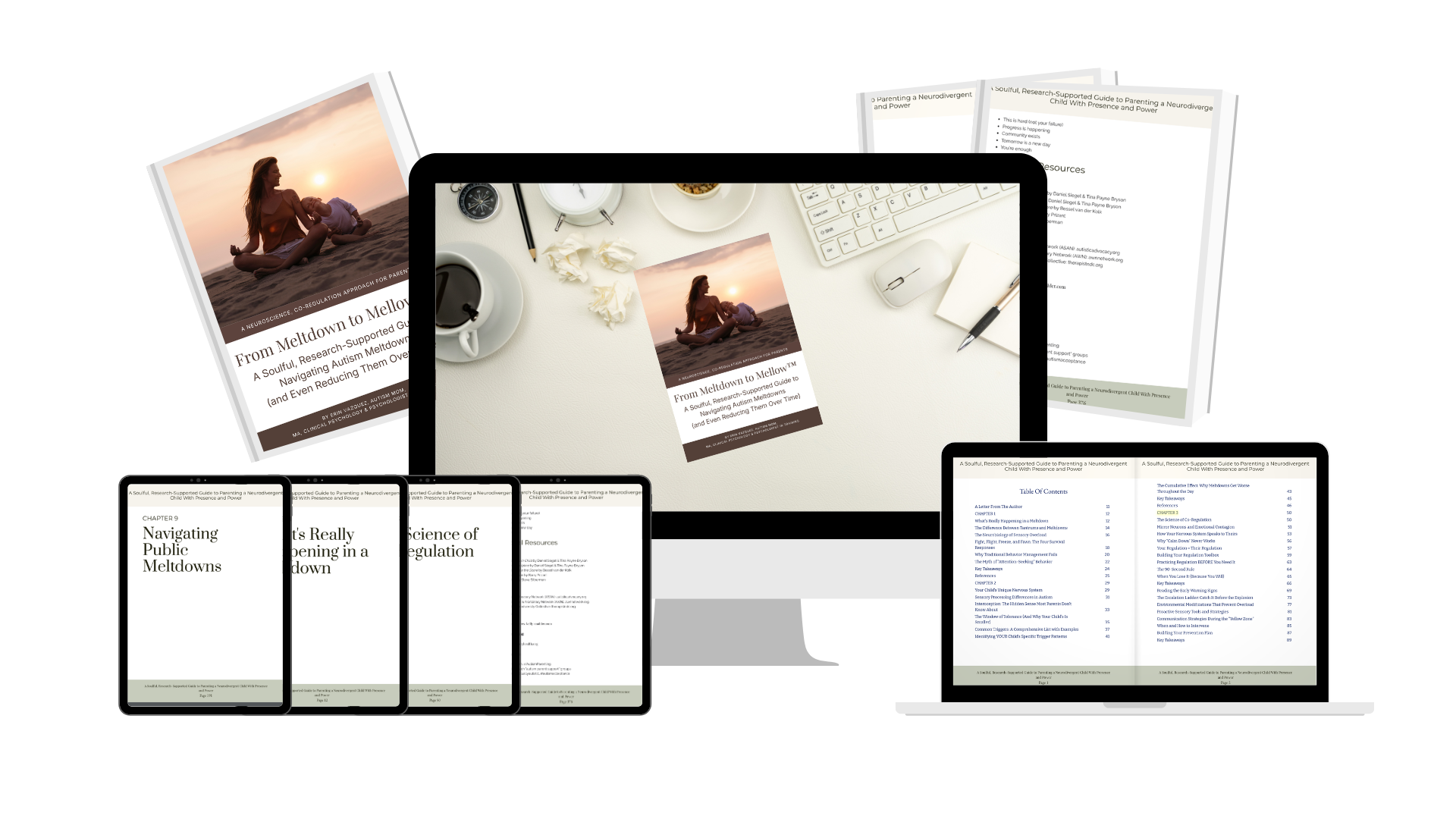
But if you want support for the full before, during, and after of autism meltdowns, I created From Meltdown to Mellow™ for you.
It’s a science-backed guide created from my lived experience as an autism mom, my M.A. in Clinical Psychology, and my ongoing doctoral studies in clinical psychology — designed to help you understand what is happening in your child’s nervous system and your own.
Inside, you’ll learn how to spot early warning signs, respond during a meltdown, navigate public moments, repair afterward, and build more steadiness over time.
You do not have to figure this out alone.
Check out From Meltdown to Mellow™ here.