
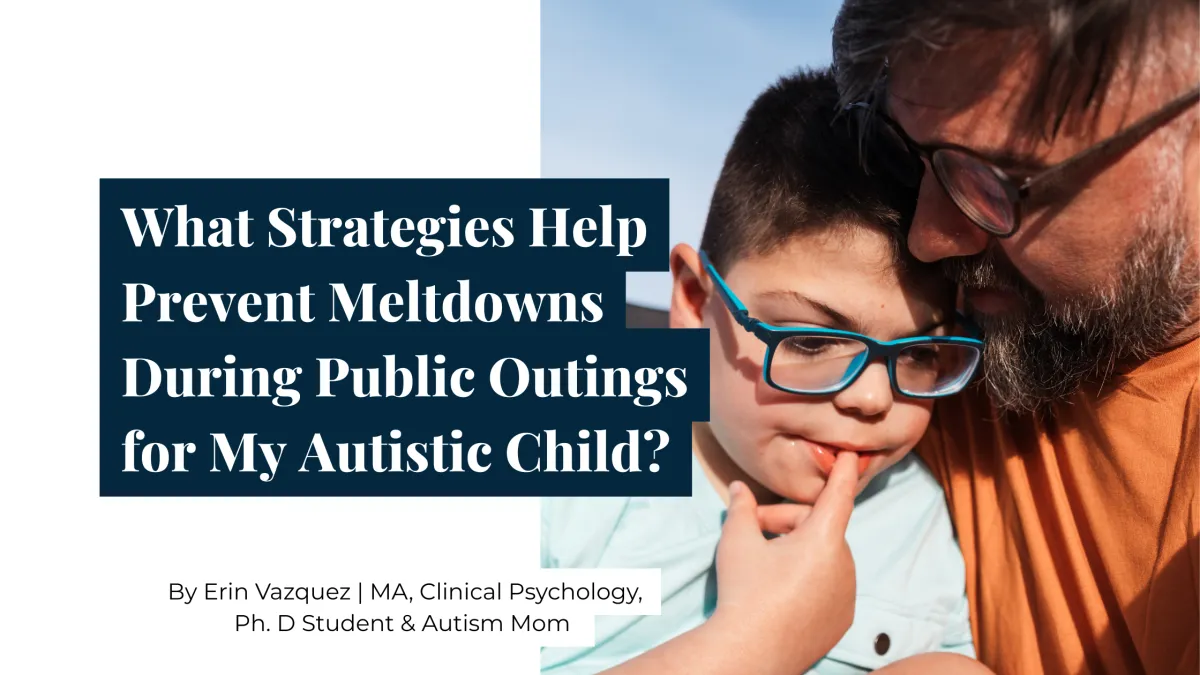
Prevent Meltdowns During Public Outings: 7 Strategies
You pack the snacks.
You check for headphones, water, wipes, and the comfort object that absolutely cannot be forgotten.
You calculate the distance between the restaurant and the car. You rehearse possible escape routes. You picture the waiting area, the fluorescent lights, the hand dryers in the bathroom, and the relative who might insist on a hug.
Then, before you have even backed out of the driveway, you wonder whether accepting the invitation was a mistake.
This is the part of public outings that most people do not see.
They see a family walking into a grocery store, birthday party, restaurant, or crowded museum. They do not see the parent performing a silent risk assessment before opening the car door.
They do not feel the knot in your stomach as you scan the environment for sensory triggers. They do not hear the voice in your head reminding you what happened last time. And they certainly do not understand how quickly an ordinary outing can become overwhelming when sensory input, waiting, transitions, hunger, social demands, unpredictability, and public scrutiny arrive all at once.
You are not overreacting. Public environments can be genuinely difficult for autistic people because they often contain unpredictable noise, lighting, crowding, smells, movement, confusing layouts, and few places to retreat. Research examining autistic experiences in public and built environments supports the need for quieter areas, clearer layouts, reduced sensory intensity, and accessible retreat spaces.
And no, a “successful” outing does not require your child to sit still, make eye contact, greet everyone, tolerate obvious distress, or appear less autistic.
The goal is not performance.
The goal is to protect your child’s nervous-system capacity while helping your family participate in the world as safely and authentically as possible.
How Can You Prevent Meltdowns During Public Outings?
Public meltdowns can often be reduced by preparing for the outing in advance, lowering sensory and social demands, bringing individualized regulation tools, increasing predictability, watching for early signs of overload, using simple communication, and having a dignified exit plan.
Prevention does not mean forcing a child to tolerate distress.
It means protecting their nervous-system capacity before they reach crisis.
It also means accepting an uncomfortable truth: even excellent preparation cannot prevent every meltdown. Autism meltdown prevention is not a guarantee. It is a way of reducing avoidable strain, recognizing overload earlier, and responding before your child’s system is pushed beyond what it can manage.
Why Public Outings Can Become Overwhelming So Quickly
A meltdown rarely begins when the screaming, crying, running, hitting, or shutdown becomes visible.
By then, your child’s nervous system may have been working for hours to absorb demands that no one else noticed.
The sock seam felt wrong at breakfast.
The usual route was closed.
School was louder than normal.
Lunch tasted different.
The transition to the car was rushed.
Now the store is crowded, the lights are harsh, someone is making an announcement over the speaker, and you are asking your child to choose between two unfamiliar products while a cart squeaks behind them.
The final trigger may look small because the accumulated load is invisible.
Sensory processing differences are common in autism and can affect responses to sound, light, touch, smell, movement, temperature, internal body sensations, and multiple forms of input arriving simultaneously. Sensory differences may also influence emotional and behavioral regulation across everyday environments.
Public outings can add several demands at once:
Sensory load: Bright lights, hand dryers, music, crowds, smells, scratchy clothing, temperature changes, or unexpected touch.
Waiting and transitions: Standing in line, leaving a preferred place, entering somewhere unfamiliar, or changing plans.
Social pressure: Greetings, eye contact, sitting still, answering questions, sharing space, or following rules that may not make sense.
Physical needs: Hunger, thirst, fatigue, illness, constipation, pain, or difficulty noticing internal body signals.
Masking: Suppressing natural movements, sounds, communication styles, or distress signals to appear more socially acceptable.
Reduced control: Not knowing when the outing will end, where you are going next, or whether an expected item will be available.
Cumulative demands: Everything your child has already managed earlier that day.
Capacity changes by context.
The restaurant your child handled beautifully after a quiet morning may be impossible after six hours of school. The grocery store they tolerated on Tuesday may overwhelm them on Friday when they are tired, hungry, and still recovering from a difficult week.
That inconsistency does not mean your child is manipulating you.
It means capacity is not fixed.
Seven Strategies That Can Reduce Meltdown Risk
1. Choose the Right Outing, Time, and Duration
Sometimes the most effective autism public meltdown strategy happens before you leave the house.
Consider not only where you are going, but when, for how long, and what else your child has already managed that day.
Whenever possible:
Visit stores, museums, restaurants, or attractions during off-peak hours.
Begin with shorter visits.
Choose one essential goal instead of combining several errands.
Avoid stacking school, therapy, shopping, dinner, and a social event into the same day.
Build in low-demand recovery time before and after the outing.
Choose locations with easy exits or quieter areas.
Decline invitations that exceed your family’s current capacity.
You are allowed to decide that the birthday party is too much after a difficult school week.
You are allowed to pick up the groceries and skip the second errand.
You are allowed to leave after twenty minutes, even if you originally intended to stay for two hours.
That is not letting autism “win.” It is responding intelligently to the nervous system in front of you.
For families rebuilding confidence after difficult experiences, start with brief, lower-pressure outings at times when both you and your child are relatively regulated. The goal is not to force tolerance. It is to create manageable opportunities for participation.
2. Prepare Your Child for What Will Happen
Predictability can reduce the cognitive and emotional load of an outing.
Visual supports are widely recommended for autistic people because they can support communication, increase predictability, reduce uncertainty, and improve participation. Evidence is stronger in some settings than others, but research and family reports support their practical value at home and in the community.
Preparation might include:
A visual schedule showing each step of the outing.
Photos or a short video of the location.
A social story explaining what may happen.
Countdowns before leaving.
A first-then statement: “First groceries, then car music.”
A written or visual list of what you need to buy.
Clear information about how long you expect to stay.
An explanation of what is flexible and what is not.
Rehearsing how your child can ask for a break or signal that they need to leave.
Be honest about uncertainty.
Instead of promising, “The restaurant will not be busy,” try:
“It might be busy. We will bring your headphones, and we can wait outside if it feels too loud.”
Instead of saying, “Nothing bad will happen,” try:
“Some parts may feel hard. We have a plan, and you can tell me when you need help.”
This preparation is not about talking your child into compliance. It is about giving their nervous system fewer surprises to process.
3. Reduce Sensory Load Before It Becomes a Crisis
Preventing sensory overload in public starts with understanding your child’s actual sensory profile.
Notice which forms of input tend to drain capacity:
Auditory: Music, announcements, barking dogs, toilets, hand dryers, clattering dishes, or several conversations at once.
Visual: Fluorescent lights, bright displays, crowds, screens, clutter, or rapid movement.
Tactile: Clothing, wet sleeves, accidental touch, sticky hands, seating textures, or crowded lines.
Olfactory: Perfume, cleaning products, food smells, bathrooms, or scented stores.
Temperature: Hot cars, cold grocery aisles, direct sun, or overheated event spaces.
Movement: Escalators, elevators, unstable seating, long periods of stillness, or too little opportunity to move.
Food-related: Unfamiliar textures, delayed meals, limited safe foods, or fluctuating blood sugar.
Look for ways to reduce input before your child is visibly distressed.
You might wait outside instead of in a crowded lobby. Choose a booth in a quieter corner. Use self-checkout to shorten the interaction. Let your child wear sunglasses indoors. Skip the bathroom with the automatic hand dryer. Ask to be seated away from speakers. Allow movement instead of repeatedly demanding stillness.
For a deeper breakdown, see Top 5 Sensory Strategies to Prevent Meltdowns During Family Outings With Your Autistic Child.
4. Bring a Small, Personalized Regulation Kit
A portable regulation kit can make autistic child public outings more manageable—but only when the contents reflect your child rather than a generic list of products.
Possible items include:
Noise-reducing headphones or earplugs.
Sunglasses or a brimmed hat.
A preferred fidget, chew, or comfort object.
Water and familiar snacks.
A change of clothes.
A visual card that says “break,” “help,” or “I need to leave.”
Downloaded music, videos, or familiar audio.
Wipes or a cooling cloth.
A small sensory item your child already uses successfully.
A charger or portable battery for communication devices.
Your child may need only two of these. Another child may need something completely different.
The purpose is not to carry an overflowing bag of trendy sensory products. It is to make a few familiar supports available when the environment becomes demanding.
Preparation, portable tools, and an accessible exit strategy are central to the public-outing guidance within From Meltdown to Mellow™. The guide also emphasizes matching supports to the child’s individual sensory needs rather than assuming the same tools work for everyone.
5. Lower Social and Performance Demands
Some public-outing distress is intensified not by the environment alone, but by what the child is expected to perform within it.
During a demanding outing, reconsider whether your child truly needs to:
Make eye contact.
Say hello.
Answer relatives’ questions.
Hug someone.
Sit completely still.
Participate in every group activity.
Make small talk.
Eat unfamiliar food.
Remain at the table after they are finished.
Hide stimming.
Appear cheerful or grateful.
Your child can attend without performing a socially polished version of participation.
They may observe before joining.
They may play beside other children rather than with them.
They may need to pace, rock, wear headphones, retreat under the table, or spend ten minutes outside.
They may need a break before they have “earned” one.
Accommodations are not rewards. A child does not have to endure escalating distress to prove they deserve support.
The goal is not to make your autistic child appear less autistic. The goal is to make participation more accessible.
6. Watch for the Pre-Meltdown Window
The pre-meltdown window is the period when your child is becoming overloaded but has not yet reached full crisis.
This is where prevention becomes most possible.
Your child’s early signs may include:
Covering their ears or eyes.
Increased stimming, pacing, or repetitive movement.
Repeating the same question.
Becoming unusually rigid about an item or plan.
Irritability.
Faster speech or louder vocalizations.
Sudden silence.
Reduced responsiveness.
Loss of language.
A tense jaw, fists, shoulders, or posture.
Refusing things they could manage earlier.
Saying “go,” “home,” “done,” or “no.”
Trying to hide or escape.
Insisting something must be “just right.”
These signals are not inconveniences to suppress. They are information.
Your child’s body may be telling you that available capacity is shrinking.
The pre-meltdown framework in From Meltdown to Mellow™ recommends identifying each child’s individual “yellow zone” signals, mapping environmental triggers, lowering demands, simplifying language, and intervening before crisis.
Do not wait for unmistakable distress to offer a break.
When you see the pattern changing, believe it.
7. Have an Exit Plan That Protects Dignity
An exit plan is not a pessimistic prediction.
It is a form of safety.
Before entering:
Notice where the exits are.
Keep your keys accessible.
Identify a quiet corner, outdoor area, family restroom, or low-traffic hallway.
Decide whether the car can serve as a regulation space.
Determine who will handle siblings, bags, food, or the shopping cart.
Agree on a signal that means it is time to leave.
Consider how you will exit quickly if your child runs or becomes unsafe.
When the nervous system is nearing crisis, abandon the cart.
Leave the unfinished meal.
Walk out before the candles are lit.
Sit in the car without deciding immediately whether you will return.
The car can provide reduced light, controlled temperature, familiar seating, water, snacks, predictable audio, and physical distance from the triggering environment.
Do not turn the exit into a public lecture.
Do not demand an apology while your child is still overwhelmed.
Do not announce, “You ruined this for everyone.”
Leave as quietly and respectfully as the situation allows.
Leaving is not failure.
Sometimes leaving is the moment you recognize your child’s communication before their body has to become louder.
For more practical planning support, read Essential Tips for Planning Successful Public Outings That Minimize Meltdowns for Autistic Kids and How to Build a Calming Environment During Public Outings to Reduce Meltdowns in Autistic Children.
What to Do When You Notice Early Signs of Overload
When your child’s regulation begins to change, use this sequence:
1. Pause and regulate yourself
Feel your feet on the floor. Drop your shoulders. Take one slow breath with a longer exhale.
You do not need to become perfectly calm. You only need to interrupt your own urgency enough to respond intentionally.
2. Reduce words
Avoid a flood of questions.
Instead of:
“What is wrong? Are you tired? Is it too loud? Do you want to leave? Why are you not answering me?”
Try:
“I see it’s getting hard.”
Then pause.
3. Remove unnecessary demands
Stop asking for eye contact, explanations, greetings, choices, apologies, or completion of the task.
The plan can change.
4. Lower sensory input
Move away from crowds, reduce sound, offer headphones, adjust clothing, go outside, or create visual space with your body.
5. Offer two simple options
“Car or quiet corner?”
“Headphones or outside?”
“Walk or I carry the bag?”
Only offer choices your child can realistically access.
6. Move toward a quieter space
Do this before safety deteriorates whenever possible.
7. Leave when necessary
You do not need to stay until you can conclusively prove the outing cannot be salvaged.
Early departure is often far kinder than pushing through until your child loses all remaining capacity.
What Does Not Help Prevent a Meltdown?
Several common responses add demands when the nervous system is already overloaded.
These include:
Demanding compliance through visible distress.
Threatening consequences.
Repeating “calm down.”
Asking question after question.
Bribing a child who can no longer process language.
Insisting they finish the outing.
Requiring an immediate apology.
Interpreting sensory distress as manipulation.
Prioritizing strangers’ comfort over the child’s capacity.
Turning regulation tools into rewards that must be earned.
When a child is moving toward crisis, additional language, teaching, negotiation, and social correction can become more input for an already overwhelmed system. From Meltdown to Mellow™ recommends lowering demands during high-intensity dysregulation, including pausing explanations, questions, eye-contact expectations, and attempts to teach a lesson in the moment.
This does not mean boundaries disappear forever.
It means the middle of nervous-system overload is not the moment for a lecture.
Safety first. Regulation next. Reflection later.
The Parent’s Nervous System Matters Too
Public meltdowns activate something uniquely painful in many parents.
Someone stares.
A stranger mutters about discipline.
A family member looks embarrassed.
You feel pressure to prove that you are competent, that you have control, that your child belongs there, and that you are not permitting “bad behavior.”
Your face grows hot. Your chest tightens. You talk faster. Your voice becomes sharper. Suddenly, you are no longer responding only to your child.
You are responding to the audience.
Research has documented the emotional burden of autism-related stigma for parents and its associations with stress, shame, burnout, depressive symptoms, unmet support needs, and reduced quality of life.
Your body may interpret the room’s attention as a threat to belonging.
That does not make you shallow. It makes you human.
But when your shame response takes over, you may feel compelled to make the visible behavior stop as quickly as possible. That urgency can lead to more talking, touching, controlling, threatening, or rushing—exactly when your child needs fewer demands.
Your own writing names this tension directly: the parent may be trying to soothe the child while simultaneously wrestling with fear, self-consciousness, and the perceived judgment of strangers.
Try this grounding practice:
Press both feet into the floor.
Let your exhale last slightly longer than your inhale.
Turn your body toward your child and away from the audience.
Repeat: “My child needs safety, not a performance.”
You do not owe strangers a convincing display of authority.
Your child does not need to become smaller so everyone else can remain comfortable.
A Simple Public Outing Prevention Checklist
Before the outing
Is my child rested, fed, hydrated, and physically comfortable?
What demands have they already managed today?
What are the likely sensory triggers?
Can we visit at a quieter time?
What is the one essential goal?
How long will we stay?
Does my child know what to expect?
What regulation tools are packed?
Where can we take a break?
What is our exit plan?
Is recovery time available afterward?
During the outing
Is my child still within their workable window?
Are their words, movements, posture, or tolerance changing?
Have I accidentally added social or performance demands?
Can I lower one demand right now?
Do they need food, water, movement, quiet, or space?
Can we take a break before continuing?
Would leaving now prevent a larger crisis?
After the outing
Does my child need food, water, quiet, movement, sleep, or familiar input?
Do I need decompression too?
What seemed to help?
What appeared to drain capacity?
What will I change next time?
Can I review the outing without blaming my child or myself?
Frequently Asked Questions
Should I avoid public outings if my child often melts down?
Not necessarily, but repeated forced exposure to overwhelming environments is not the answer either. Begin with brief, lower-demand outings at regulated times, choose environments with accessible exits, and increase complexity gradually. Some events may need to be declined while you build a more supportive plan.
How long should an outing be?
There is no universal ideal length. Start with what your child can manage without becoming severely depleted—even if that is only ten or fifteen minutes. End while some capacity remains rather than waiting until your child is in crisis. Duration can expand over time, but longer is not automatically better.
Should I explain my child’s autism to strangers?
Only when it serves you or your child. You can say, “My child is autistic and needs space,” but you owe no diagnosis disclosure to random onlookers. Educating teachers, relatives, coaches, or people you will see again may improve future interactions. Hostile strangers rarely deserve your limited energy. From Meltdown to Mellow™ recommends prioritizing your child over explanations when you are dysregulated or when your child needs your full attention.
What if we prepare and a meltdown still happens?
It does not mean the preparation failed.
Some environments are too intense. Some stressors cannot be predicted. Your child may have been carrying more accumulated stress than either of you realized.
Shift from prevention to safety: regulate yourself, reduce words and demands, lower sensory input, create space, and leave if needed. Later, review what happened with curiosity rather than blame.
Prevention Is Support, Not Control
You can choose the quiet hour, pack the right tools, show your child the visual schedule, lower demands, and leave before the environment becomes unsafe.
And a meltdown may still happen.
That does not make you unprepared.
It does not make your child manipulative.
It does not turn the outing into a parenting failure.
Meltdowns are not always preventable because human nervous systems are not machines. Capacity changes. Bodies hurt. Environments surprise us. Stress accumulates invisibly.
The work is not to guarantee that your child never becomes dysregulated in public.
The work is to notice sooner, respond with less shame, protect dignity, and remember that your child’s right to exist in public is not contingent on appearing calm.
Prevention is support, not control.
Accommodations are not giving in.
Leaving is not failure.
And the goal was never to make your child appear less autistic.
For additional support, explore:
Top 5 Sensory Strategies to Prevent Meltdowns During Family Outings With Your Autistic Child
Essential Tips for Planning Successful Public Outings That Minimize Meltdowns for Autistic Kids
How to Build a Calming Environment During Public Outings to Reduce Meltdowns in Autistic Children
Effective Communication Techniques to Help Your Autistic Child Navigate Public Outings Smoothly
In Conclusion
You do not need to memorize the perfect response while strangers are staring and your own nervous system is flooding.
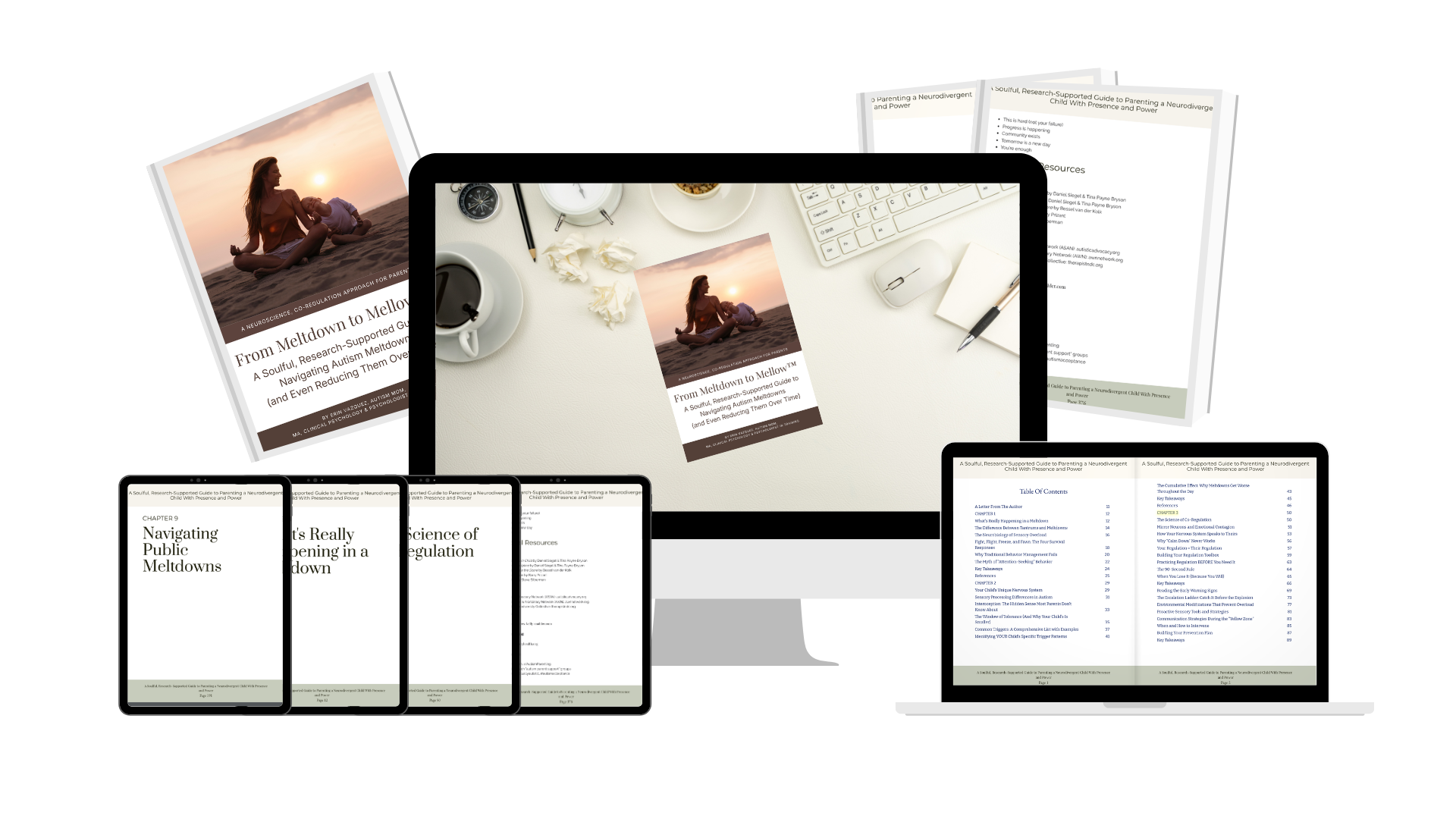
I created a comprehensive guide called From Meltdown to Mellow™. It gives you a deeper, step-by-step framework for understanding what is happening beneath a meltdown, recognizing the pre-meltdown window, reducing sensory load, communicating with fewer demands, and responding with more clarity when an outing does not go as planned.
It doesn't promise you a perfectly calm child or a life without difficult moments. But, it will help you feel less disoriented inside them so you can protect your child’s dignity, steady your own nervous system, and know what to do next.
References
Black, M. H., McGarry, S., Churchill, L., D’Arcy, E., Dalgleish, J., Nash, I., Jones, A., Tse, T., Gibson, J., & Bölte, S. (2022). Considerations of the built environment for autistic individuals: A review of the literature. Autism, 26(8), 1904–1915. https://doi.org/10.1177/13623613221102753
Chan, K. K. S., & Lam, C. B. (2023). Longitudinal impact of self-stigma content and process on parental warmth and hostility through parenting stress among parents of children with autism spectrum disorder. Journal of Autism and Developmental Disorders, 53, 2267–2278. https://doi.org/10.1007/s10803-022-05516-x
Knight, V., Sartini, E., & Spriggs, A. D. (2015). Evaluating visual activity schedules as evidence-based practice for individuals with autism spectrum disorders. Journal of Autism and Developmental Disorders, 45(1), 157–178. https://doi.org/10.1007/s10803-014-2201-z
MacLennan, K., O’Brien, S., & Tavassoli, T. (2023). Sensory experiences of autistic adults in public spaces. Autism in Adulthood. Advance online publication. https://doi.org/10.1089/aut.2022.0024
Restoy, D., Oriol-Escudé, M., Alonzo-Castillo, T., Magán-Maganto, M., Canal-Bedia, R., Martínez-González, A. E., & Alcantud-Marín, F. (2024). Emotion regulation and emotion dysregulation in children and adolescents with autism spectrum disorder: A meta-analysis of evaluation and intervention studies. Clinical Psychology Review, 109, 102410. https://doi.org/10.1016/j.cpr.2024.102410
Rutherford, M., Baxter, J., Grayson, Z., Johnston, L., & O’Hare, A. (2020). Visual supports at home and in the community for individuals with autism spectrum disorders: A scoping review. Autism, 24(2), 447–469. https://doi.org/10.1177/1362361319871756
Samson, A. C., Hardan, A. Y., Podell, R. W., Phillips, J. M., & Gross, J. J. (2015). Emotion regulation in children and adolescents with autism spectrum disorder. Autism Research, 8(1), 9–18. https://doi.org/10.1002/aur.1387
Tola, G., Talu, V., Congiu, T., Bain, P., & Lindert, J. (2021). Built environment design and people with autism spectrum disorder: A scoping review. International Journal of Environmental Research and Public Health, 18(6), 3203. https://doi.org/10.3390/ijerph18063203
Turnock, A., Langley, K., & Jones, C. R. G. (2022). Understanding stigma in autism: A narrative review and theoretical model. Autism in Adulthood, 4(1), 76–91. https://doi.org/10.1089/aut.2021.0005
Zuckerman, K. E., Lindly, O. J., Reyes, N. M., Chavez, A. E., Macias, K., Smith, K. N., & Reynolds, A. (2018). Parent perceptions of community autism spectrum disorder stigma: Measure validation and associations in a multi-site sample. Journal of Autism and Developmental Disorders, 48(9), 3199–3209. https://doi.org/10.1007/s10803-018-3586-x